
BMS systems: the intelligent brain transforming building management.
The integration and automation of building systems enable optimized energy consumption, enhanced occupant comfort, and improved operational efficiency in increasingly demanding environments.
In a context where digitalization, energy efficiency, and sustainability have become strategic objectives for businesses, Building Management Systems (BMS) have established themselves as a key tool in the operation of modern infrastructures. These systems act as the building’s “brain,” providing a centralized platform for monitoring, controlling, and optimizing technical building systems.
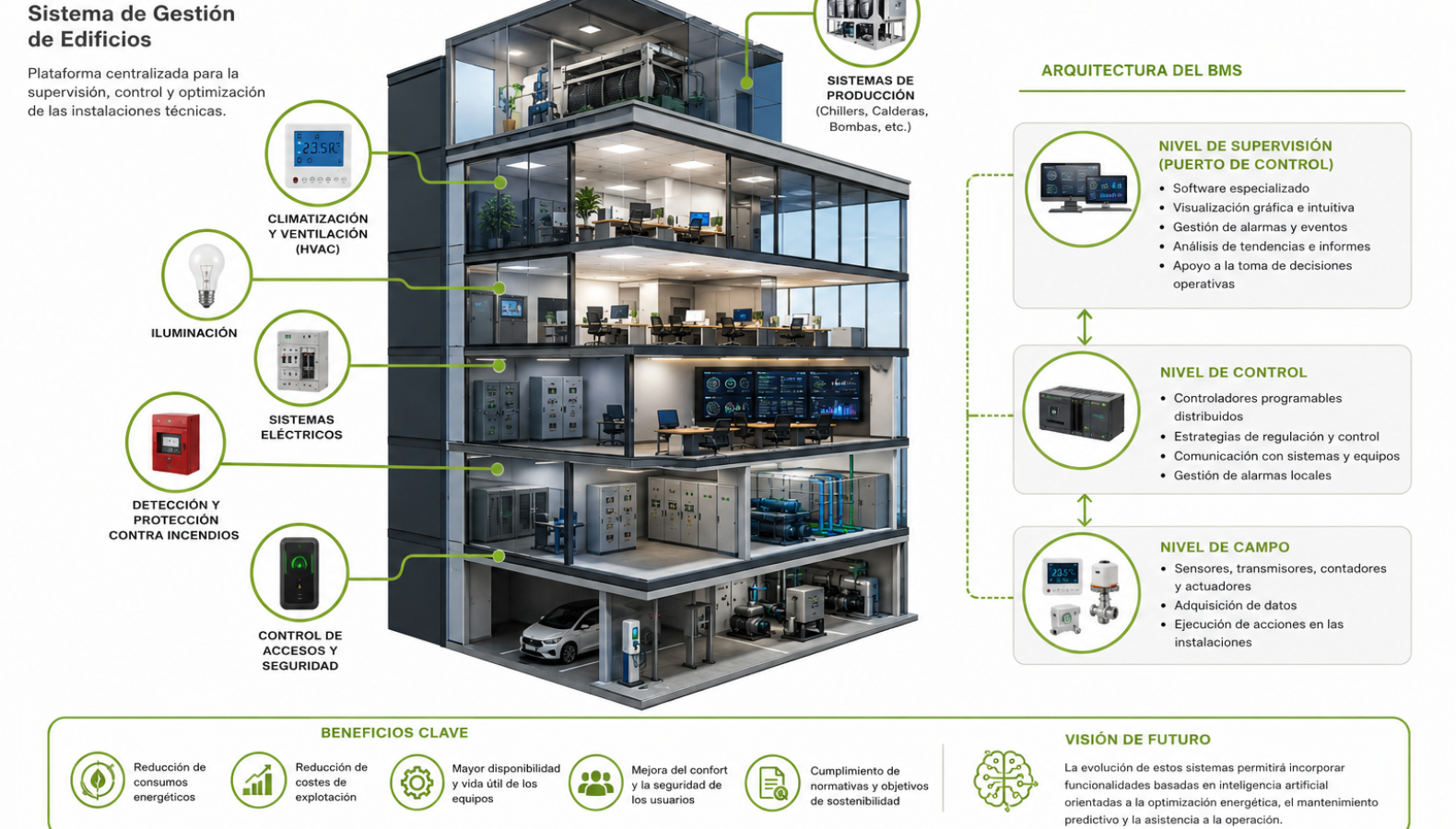
A BMS enables the integrated monitoring and management of various technical building systems. The most common include heating, ventilation, and air conditioning (HVAC), lighting, electrical systems, fire detection and protection systems, and access control and security, among others. This integration not only facilitates real-time monitoring but also enables process automation, reducing energy consumption and improving overall efficiency.
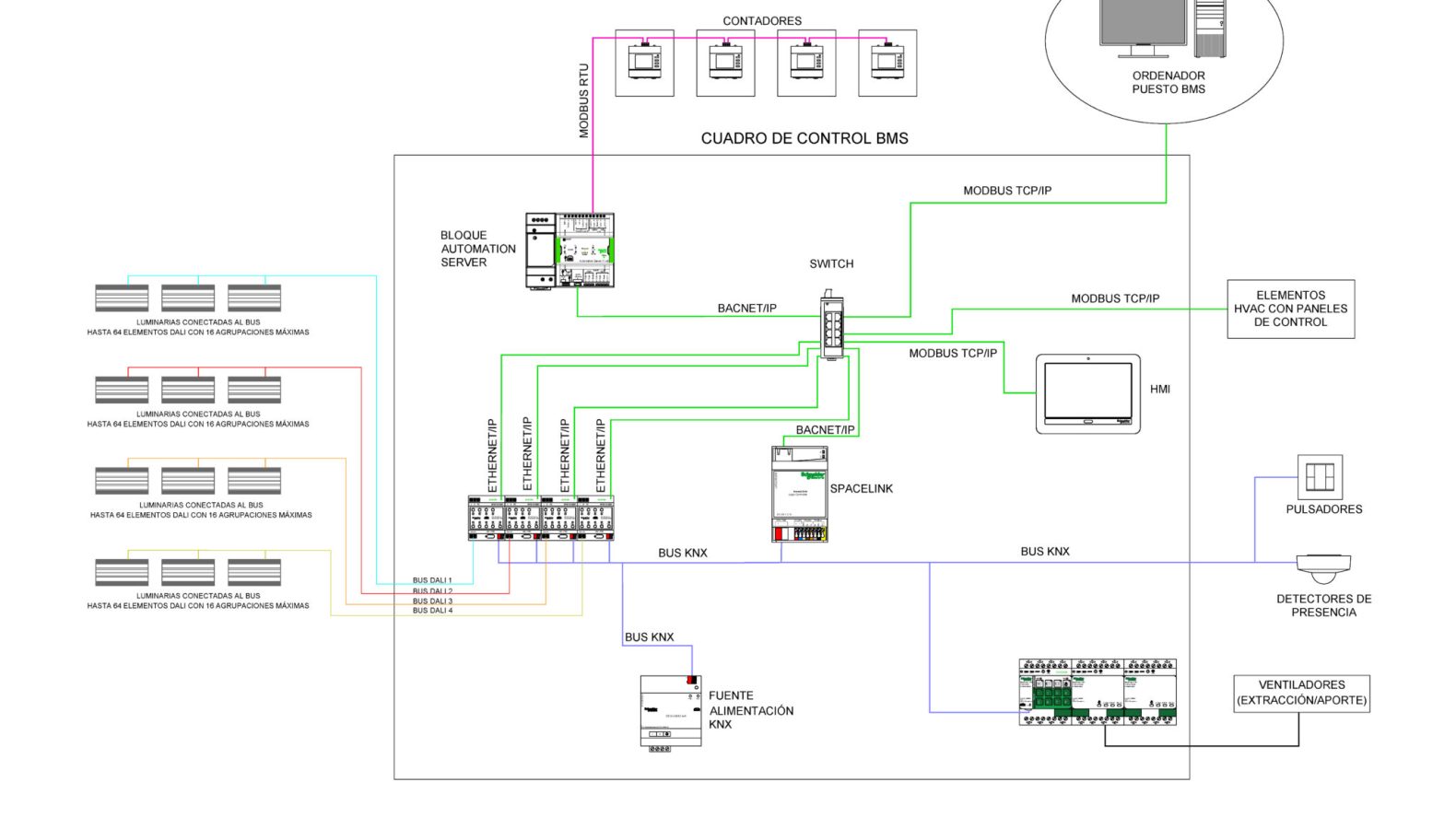
The architecture of a BMS is typically structured into different levels. At the field level, sensors, transmitters, meters, and actuators are responsible for collecting information and, where required, executing the necessary actions on the building systems. These devices are connected to distributed programmable controllers, usually installed in automation panels, where control strategies are implemented through operating logic and specific algorithms. These panels also incorporate power supplies, communication gateways, input/output modules, communication equipment, electrical protection devices, and auxiliary components required to ensure the system’s availability and reliability.
elementor-template id=”5113″]
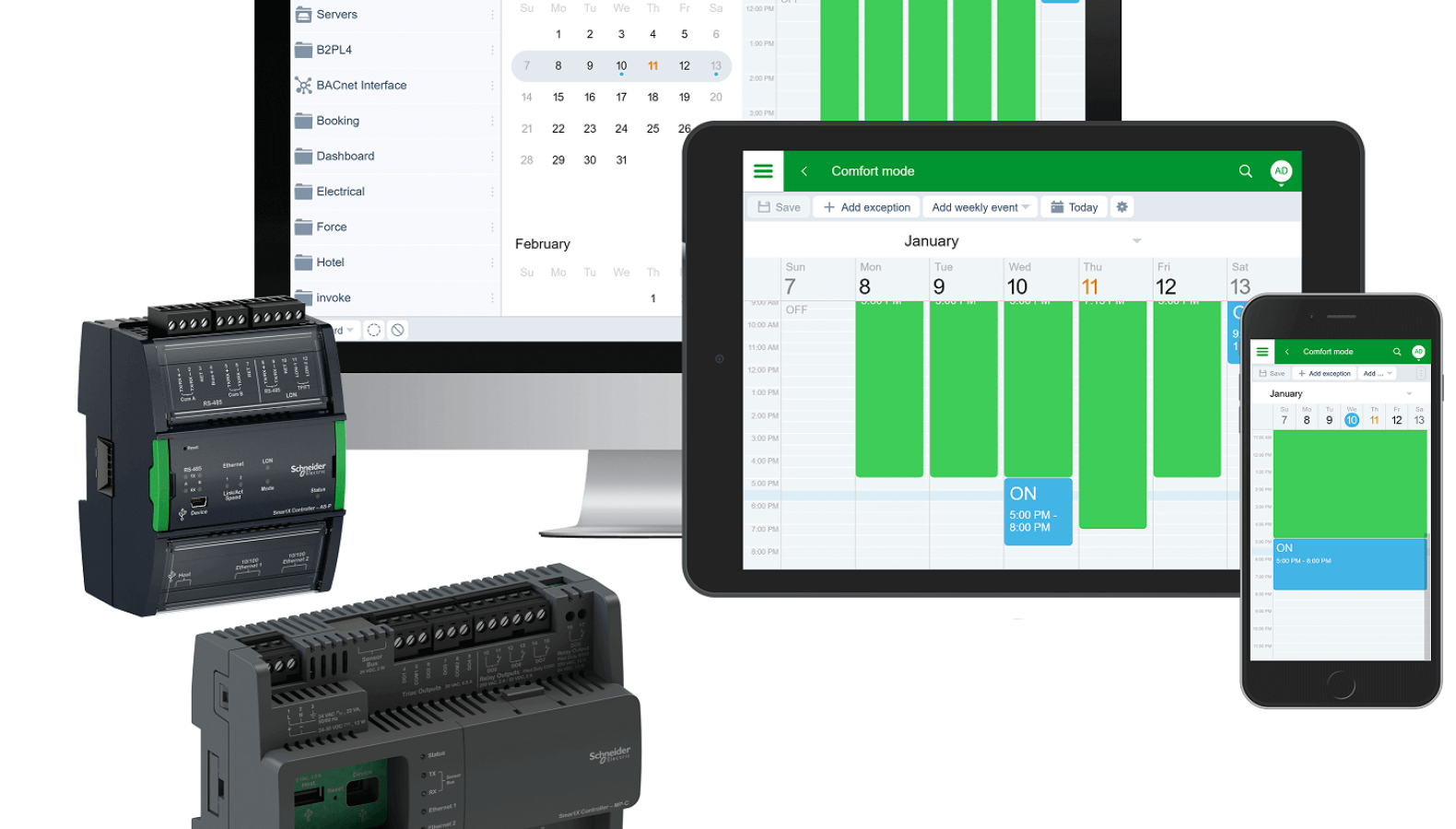
Built on this distributed architecture is the supervisory level, consisting of the control workstation, which serves as the primary interface between the operator and the building systems. Through specialized software, operators can visualize the building’s status using intuitive graphical interfaces, manage alarms and events, analyze historical trends, generate reports, and support operational decision-making. This supervisory layer is essential for anticipating incidents, optimizing performance, and maximizing the availability of building systems.
Beyond the technology itself, the true value of a BMS lies not only in the automation of building systems but also in its ability to continuously optimize building operations through advanced control strategies, predictive maintenance, and data analytics.
In this regard, at Savener we have developed a range of BMS solutions tailored to each client’s specific needs, integrating innovative technologies. These solutions help reduce operating costs, increase equipment availability, extend asset service life, and improve occupant comfort and safety, while also contributing to the achievement of energy efficiency objectives and compliance with increasingly demanding sustainability standards.
The evolution of these platforms will progressively enable the incorporation of artificial intelligence techniques to optimize control strategies, enhance predictive maintenance, and support decision-making through advanced data analytics.
Ultimately, BMS systems represent a decisive step toward smarter, more connected buildings and infrastructures that are better prepared to meet the challenges of the future.