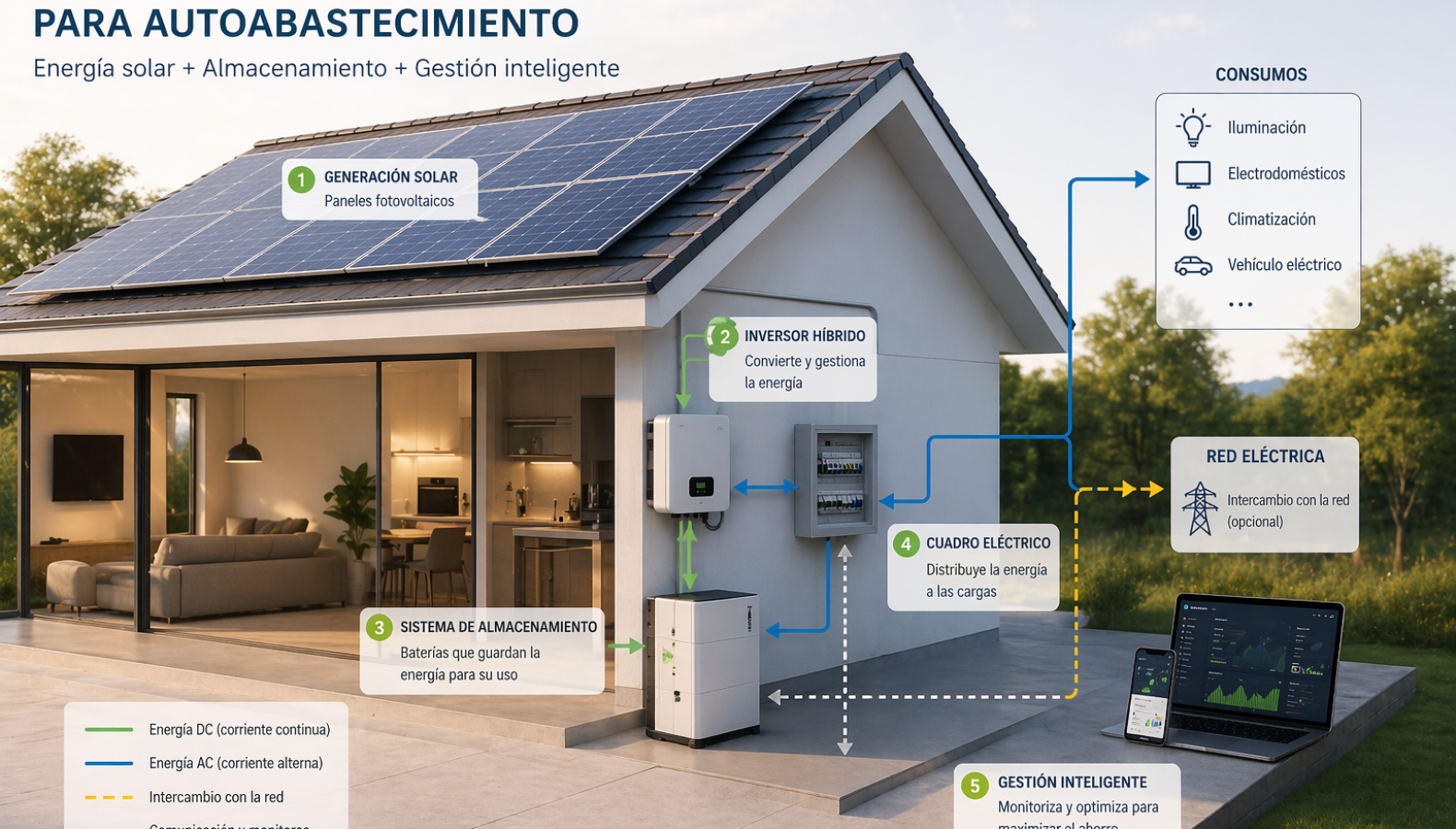
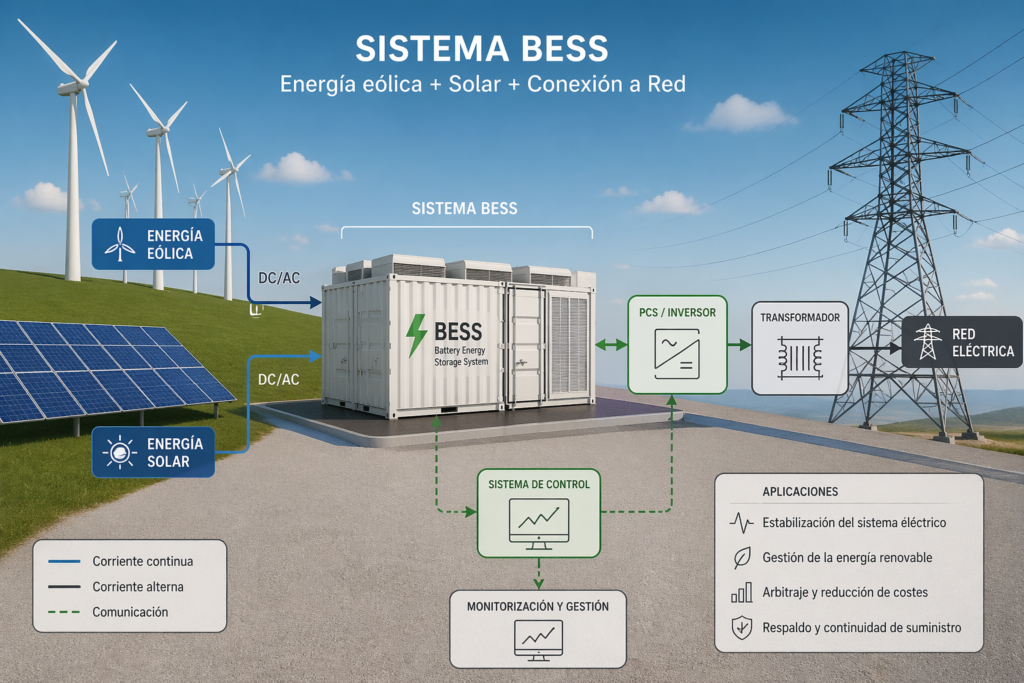
Electricity storage is a key pillar of the energy transition. Its role is no longer limited to specific applications, but acts as a structural element across multiple sectors: from stabilising the electricity system to industrial and residential self-consumption.
In this context, technological developments are rapid and diverse. There is no single definitive solution, but rather an ecosystem of technologies that address different operational needs.
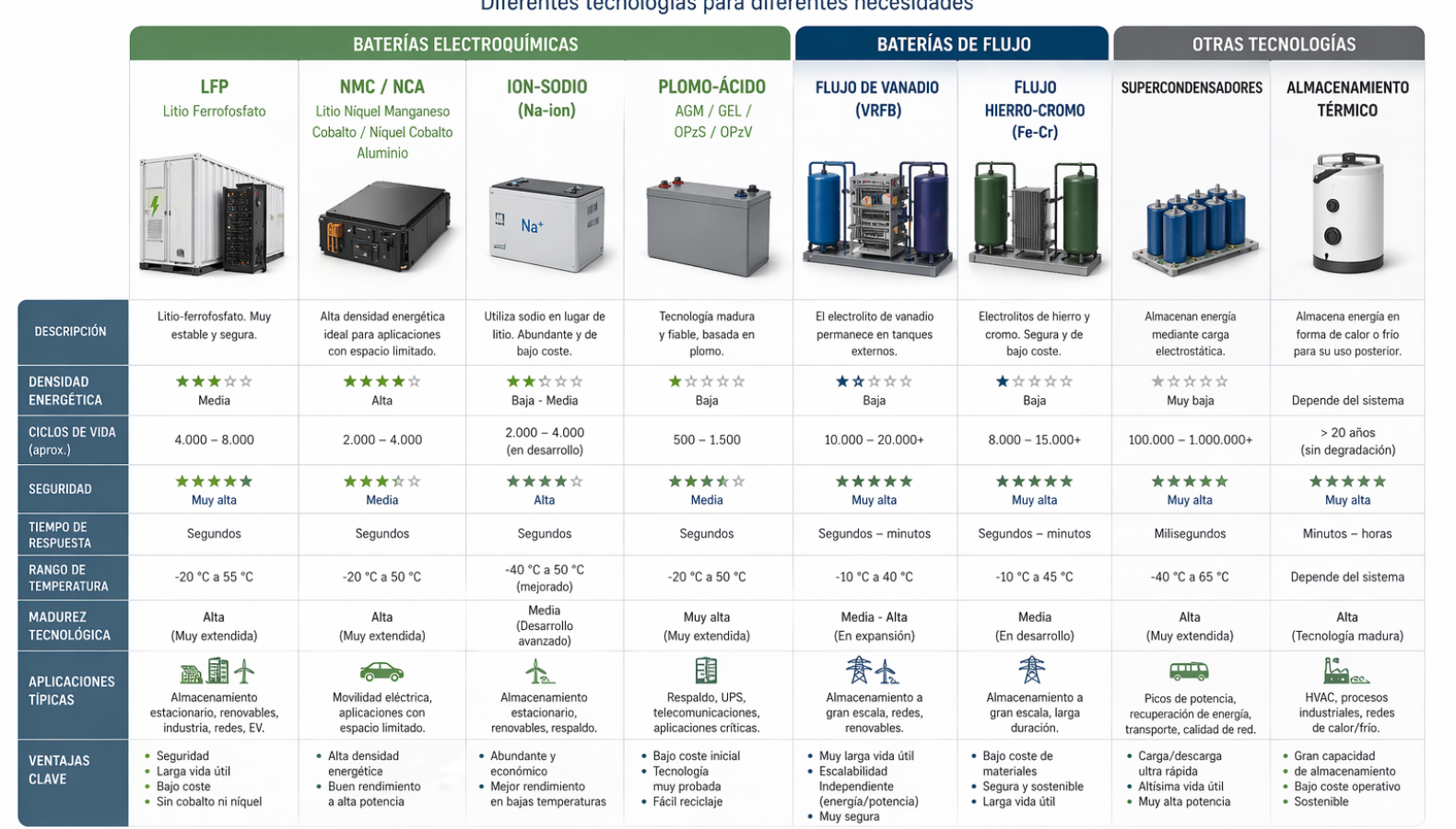
Lithium-ion batteries continue to lead the market. Within this family, NMC and NCA chemistries offer high energy density, whilst lithium iron phosphate (LFP) has established itself as the most balanced option for stationary applications thanks to its safety, durability and competitive cost.
Alongside these, sodium-ion is emerging as a strategic alternative. Based on abundant materials, it reduces dependence on critical resources and is set to play a significant role in stationary storage in the medium term.
In large-scale applications, flow batteries offer distinct advantages such as long service life and high safety, although their deployment remains limited by economic and space constraints.
At the same time, the latest advances—driven in particular by Asian manufacturers—are expanding storage capabilities. New generations of batteries are capable of operating in extreme conditions, including very low temperatures, whilst maintaining high levels of performance. Meanwhile, the trend towards reducing the use of critical materials enhances the sustainability and resilience of the supply chain.
Traditional technologies such as lead-acid remain present in backup applications, although they have been overshadowed by more advanced solutions.
In this scenario, the challenge is not merely technological, but strategic: The most suitable solutions must be selected and combined according to each application, whether it involves integrating renewables, providing backup, managing demand or developing Smart Grids.
The future of energy storage does not lie in a single technology, but in the ability to adapt to an increasingly complex, flexible and decarbonised energy system.